

#7. One Last Mission
Are the backpacking days over?

People call the Pamir Mountains the “roof of the world”.
They’re the bizarre meeting point of three of the world’s highest mountain ranges (the Himalayas, the Hindu Kush, and the Tian Shan), and home to some of the most remote mountain settlements on Earth.
The only way through them is a Soviet-era ‘highway’ that looks more like a rutted out dirt road with boulders the size of refrigerators—that is, when it isn’t covered under a meters-thick layer of snowpack for most of the year.
So it’s not really supposed to be easy to cross.
But that’s why we figured it’d be even more fun to try hitchhiking it!
…backwards!
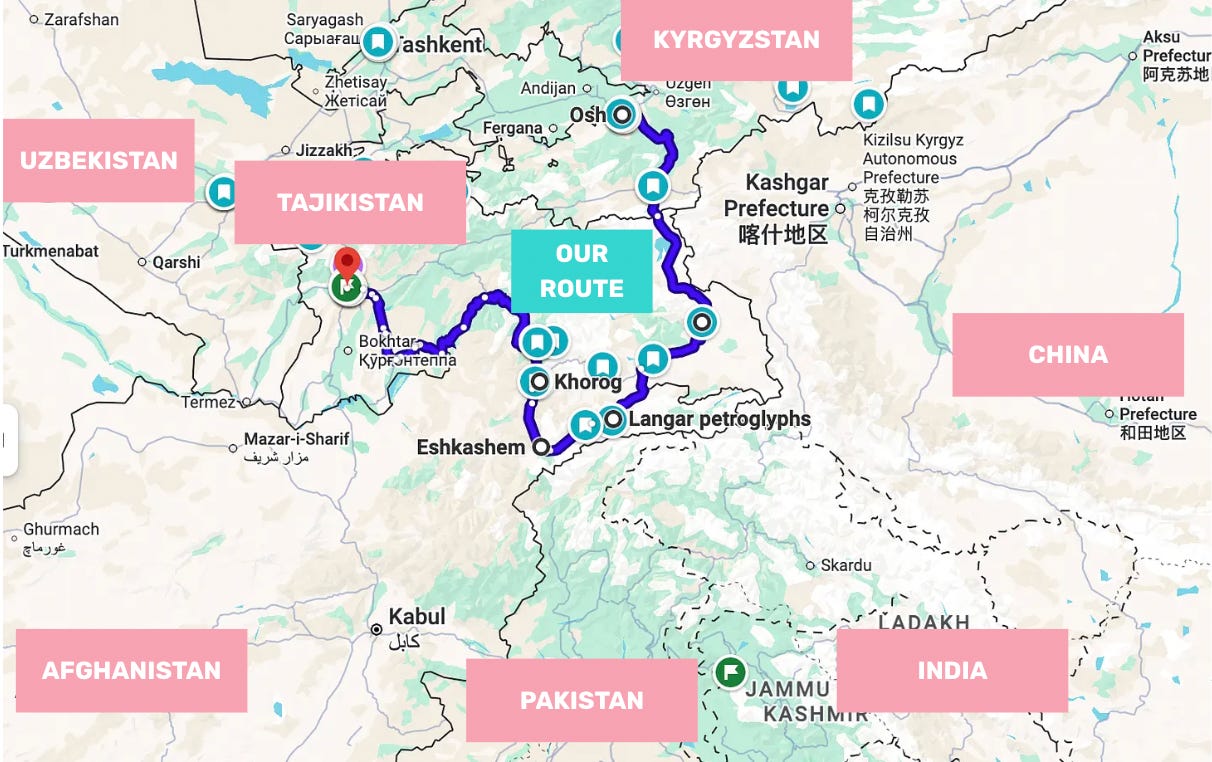
Segment 1: Osh to Sary Tash
This first part was a breeze. We waved down a car near the city of Osh, Kyrgyzstan in about 30 seconds, and we hitched with them for 3.5 hours. Kyrgyzstan and Kazakhstan stan-d in first place for most hospitable hitchhiking countries we’ve ever been to — fast pickups, friendly faces, snacks provided (usually). The driver that picked us up this day happened to cruise right past our first stop, the pretty little town of Sary Tash, where we hopped out feeling very optimistic about our decision to hitchhike.
The town sat in the open valley facing the Pamirs. The morning views certainly had drama. It was a beautiful little village, too, and we even made some bovine besties.


We got stuck there 2 days while waiting for our permits to come through. We needed a specialized permit to travel the Pamirs, which are technically an autonomous region within Tajikistan (the country is 94% mountains and hasn’t figured out how to govern the non-flat part).
We applied for a permit with our visa (the official way), but the permits get stalled unless you go with an agency that bribes (*ahem*) knows the Tajik permit officers well enough to get expedited treatment. We found a WhatsApp number, handed a $100 to some neighborhood guy and got our permits next day.
Gotta love Central Asia.
Segment 2: Sary Tash to Murghab
Now getting into the Pamirs is a bit tricky when you don’t have a car. Tourists usually either rent a private car (pretty rare given the driving conditions), join a small group tour (common, but the guides never allow pick up of hitchhikers), or ride bikes (the Pamirs are a legendary bikepacking spot).
The added challenge was that we were against the flow of most tourists (INTO Tajikistan——about 90% of tourists start in Tajikistan and end in Kyrgyzstan). Oh and there isn’t really much local traffic either because the two countries had a military standoff around a border dispute in 2023-2024——armed conflict really puts a damper on trade.
[Don’t worry, mom(s), there’s nothing dangerous about the area now]
But in a shocking turn of events, the military presence came in extremely handy... for us.
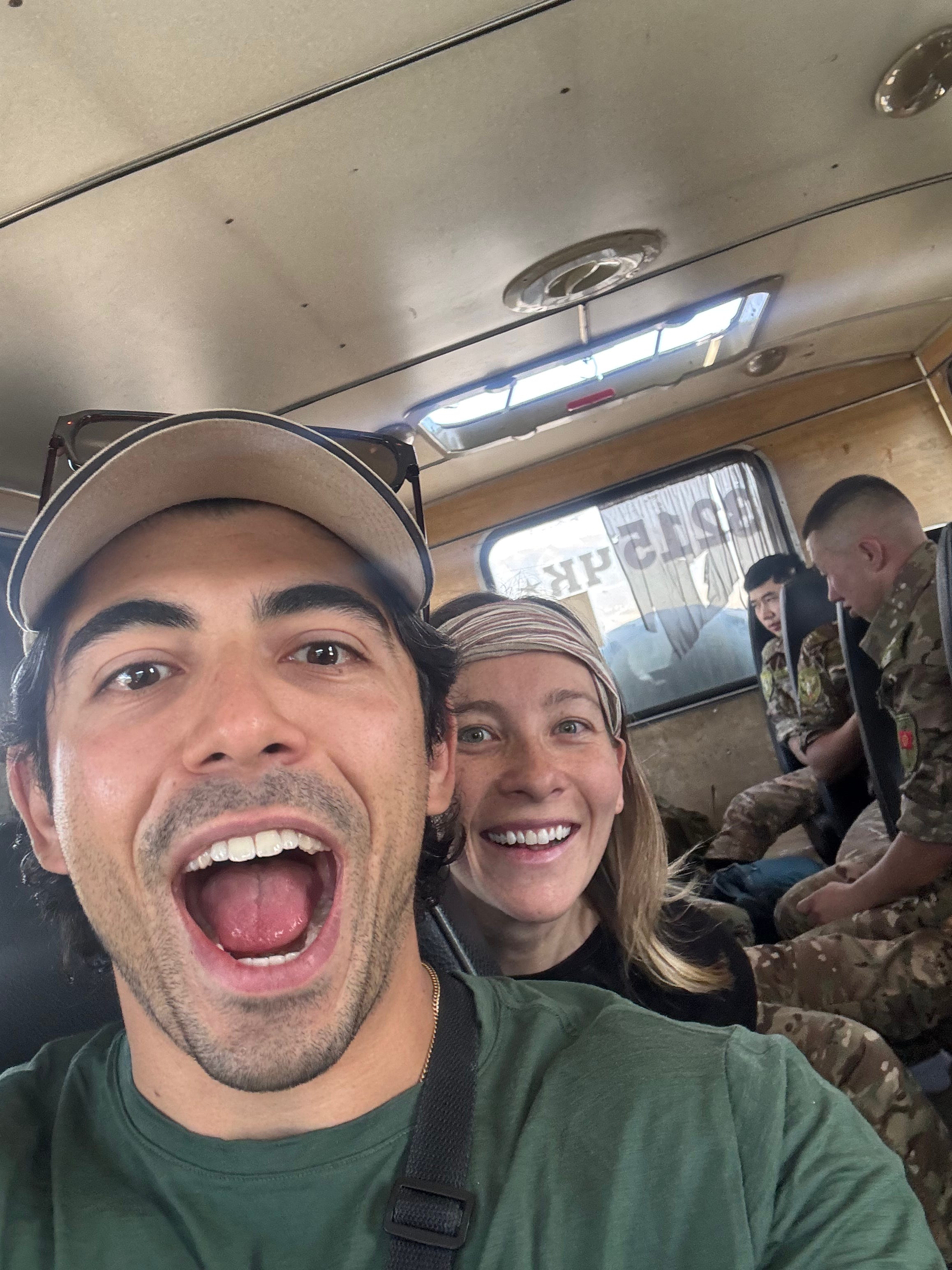
Some border patrol officers on their way to a shift change picked us up off the road and drove us right to the Kyrygz border post! Most of them were friendly guys (like all Kyrgyz), though a couple certainly stayed a little apprehensive——and definitely didn’t love photos, so we had to be a bit sneaky.
The only issue at the border post was that the Tajik border was another 10 miles away uphill through mountains, and there was no through traffic to get a lift through. Yikes.
So we got stranded for a little while in no man’s land. Oh well. We passed the time admiring the views, playing Connect4 (Jordan beat Hannah x2 Hannah edit: the game record remains inconclusive), and Hannah even got a little nap in (sleeping off her stinging defeat, surely).


By some mystery, a vehicle rescue truck came along headed to Murghab, and a nice Kyrgyz man let us hop in. The vehicle struggled to do basic climbs and the engine sounded like it was filled with rattlesnakes and ready to explode at any minute——the van had no business entering a place like Tajikistan (let alone the thought of trying to rescue OTHER vehicles in the mountainous terrain), but we took the ride anyway and crossed our fingers when the engine stopped on a steep uphill and the driver slipped it into neutral to go backwards down the hill until a semi-flat zone where he could reattempt\ the ascent. Our trusty savior succeeded after three tries (sign of relief) and didn’t get detained by the Tajik border guards despite them calling him into a dark scary-looking back room for questioning (second sigh of relief). Something about his chain smoking made us think he was a little nervous about the traverse, but we couldn’t ask because we know zero Russian or Tajik.
But you have to let some mysteries be. Sometimes, you’re not meant to understand them.


And hey, they were some pretty mountains.
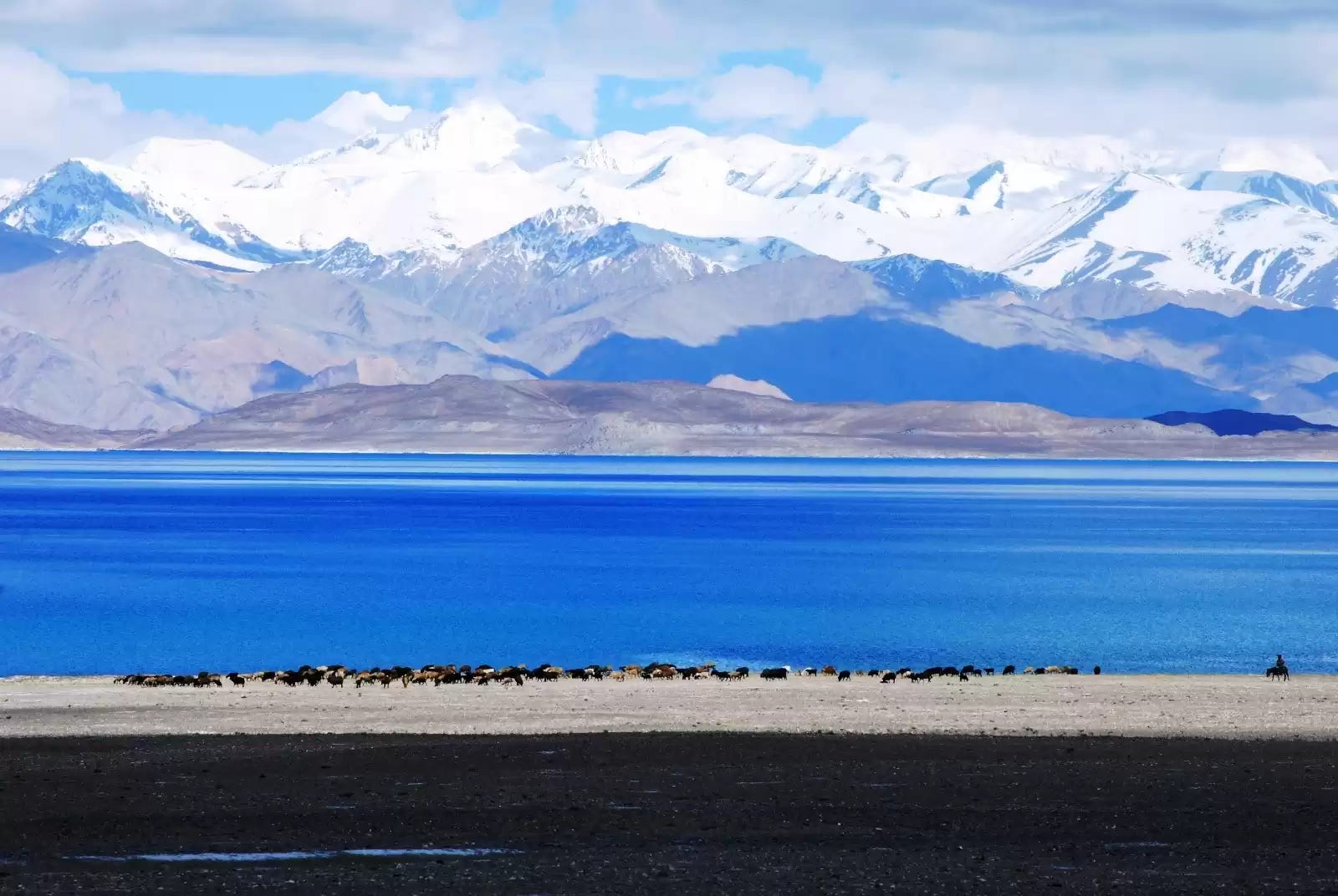
With all kinds of crazy and unlikely creatures...
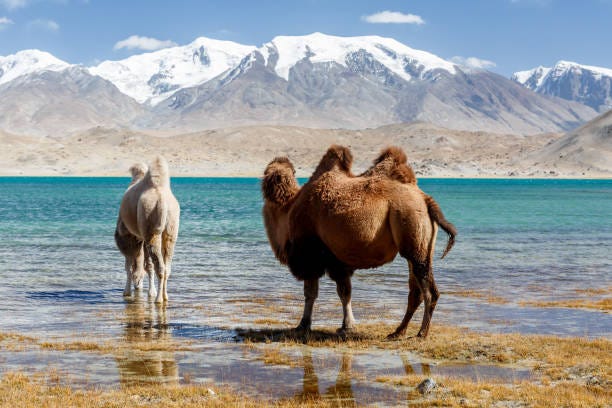
And the ride was quite a vibe, too. All the way into Murghab.
Segment 3: Murghab to Alichur
It’s hard to describe the town of Murghab. Dirt-poor, but beautiful. Alpine, but desert…well, think the-moon-meets-mars topography. Flat, but surrounded by snow-capped peaks. Somewhat crowded, but also barren. It’s a wonder that pastoralists have lived here for thousands of years. By our arrival, it was late May, but the evenings still had a frosty bite.
It’s also the type of town where you have to try four different “markets” to find something as simple as bottled water. And the lack of health services makes you really afraid to fall ill...
Which we did... of course (more food poisoning).
But hey, we got a whole recovery day to play cards in the cute little rustic homestay (where we met quite a mix of adventure travelers), and explore this unlikely little desert town.


After a day of recovery and a visit to the local “hospital,” we were feeling fresh and ready to try our luck hitchhiking again. We even used our signs!
One message for the tourists, “WE HAVE CANDY” and one for the locals,“WILL GIVE GAS $!” You gotta know your audience.


Unfortunately we didn’t have much luck for the first hour. Travel between these Pamir towns gets pretty scarce, and not a lot of people have money for fuel, let alone cars, so they tend to rely on shared vans that only leave once a day (and didn’t work with our timing).
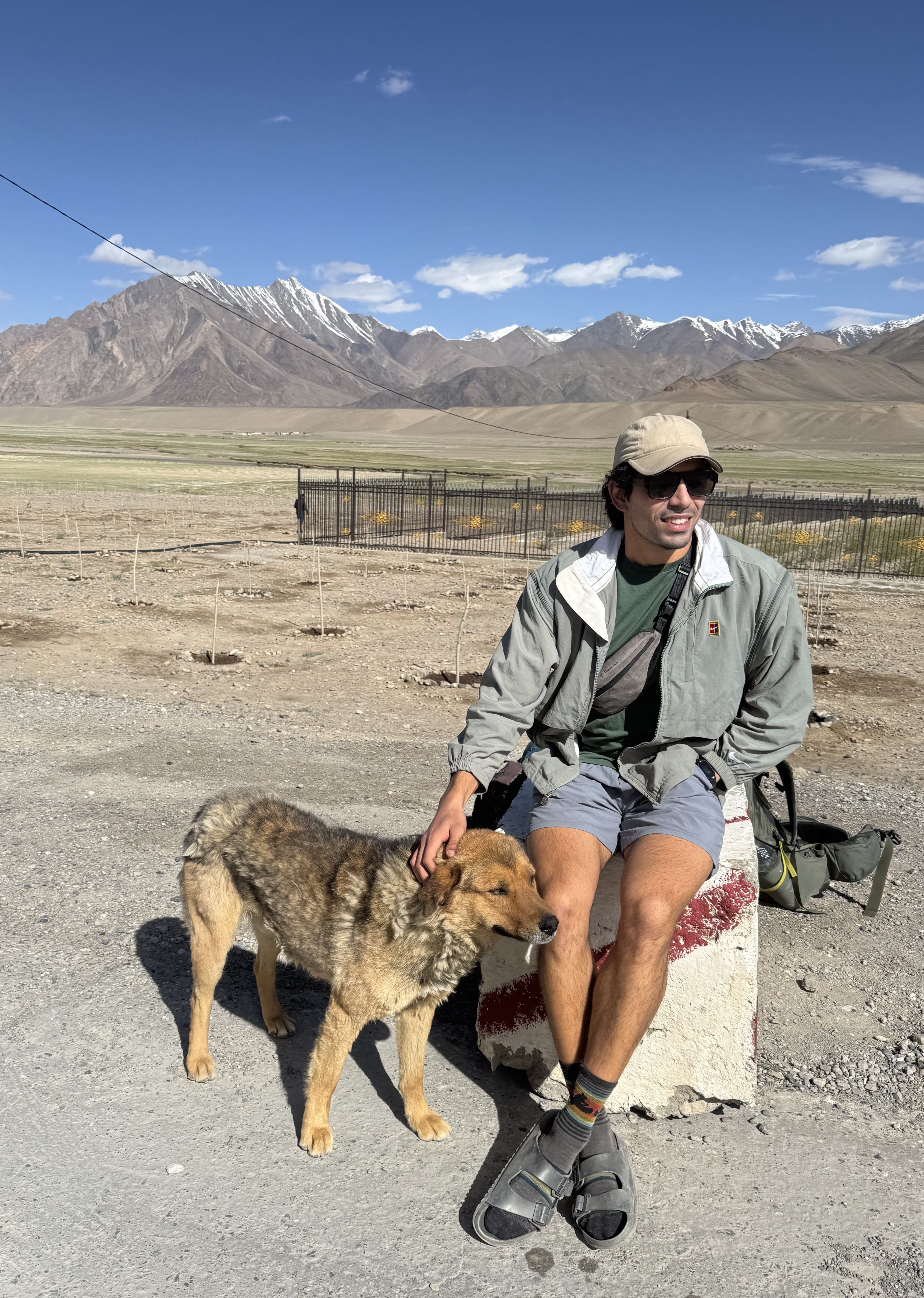
But as luck would have it, something did come along to change our fortunes.
Something we would not have expected...
A Chinese trucker.
A man got out of his double-trailer semi to give papers to the checkpoint officer, and Jordan jumped at the opportunity. He greeted him in Mandarin and, after a little sweet-talking, was running over to hoist our bags into the back of the cabin.
We’d found our ride to Alichur!
Fengping was a 42 year old dad from Guangdong, and he sure had a lot of opinions.
First he ranted about how the Tajiks didn’t know how to build roads. He forgave them, because they’re poor, but he didn’t forgive the fact that they couldn’t at least fill in the thousands of potholes——”Everyone’s unemployed!” he kept exclaiming “what else are they doing? For potholes you don’t even need cement! Just rocks! Look at all the rocks!”
They he complained about the Tajik food. Fengping packed an entire week’s worth of food from China——everything from noodles to snacks to fresh vegetables and even frozen meat——because he didn’t want to risk it on the local fare. He offered us snacks every 30 minutes or so, and we’d trade him some treats we had in exchange. During a stretch break in the middle of our 5 hour drive, he even offered to make us a Chinese hotpot. Yes, he had all the equipment and ingredients needed. This made us question the American trucking diet of fast food and Monster energy. Fengping needs to give some tips (or in his style, a rant) to the American Trucker’s Association.
“But aren’t these mountains so pretty?” We asked him, trying to stay positive.
“Eh” he shrugged. “You should see Xinjiang.”
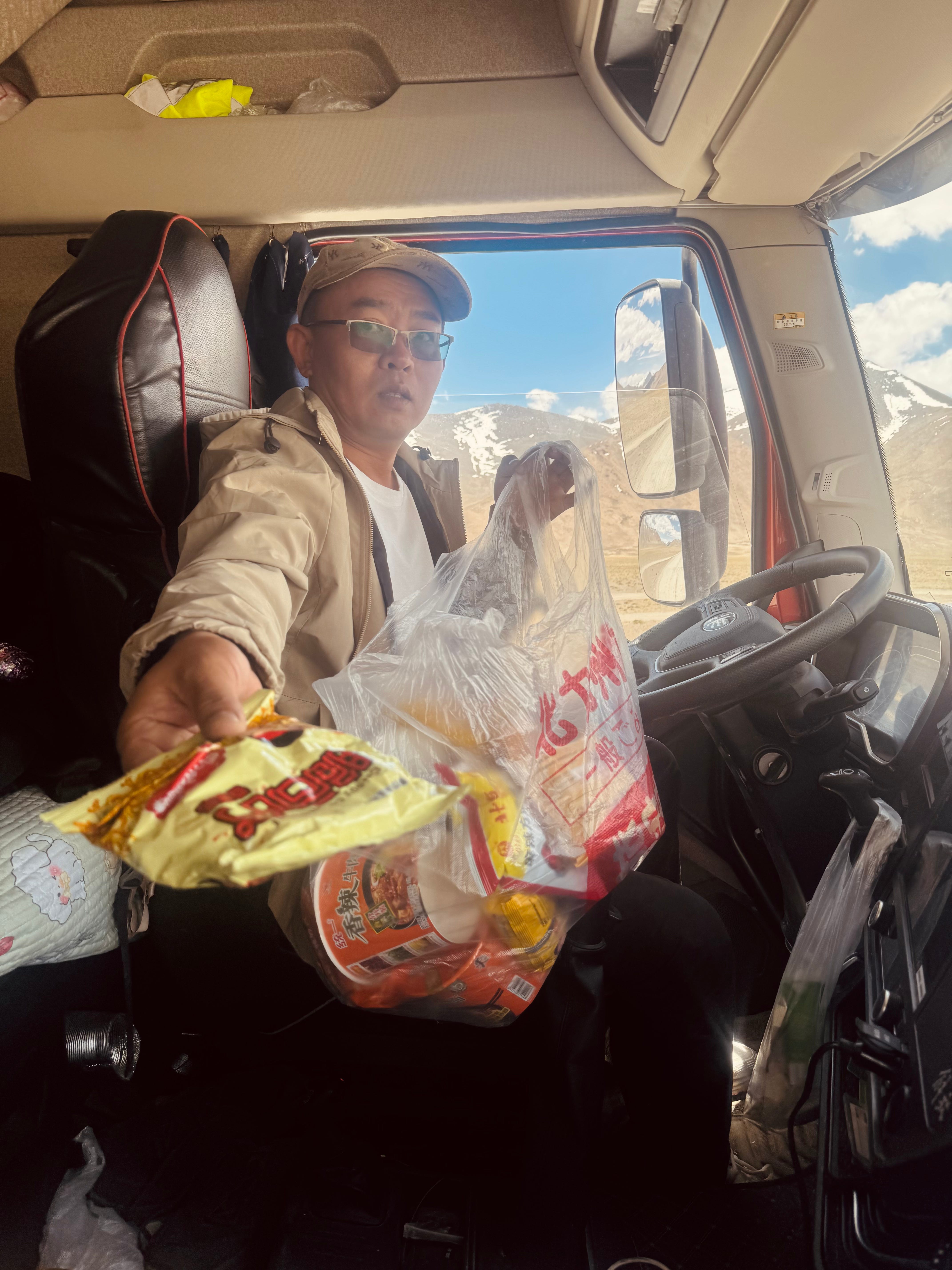
He sleeps in the back of his cab, eats his food from China, only drinks WATER he brought from China, and tries to talk to pretty much no one on these journeys except his family via Facetime calls whenever there is intermittent service. “I wouldn’t have picked you up if you didn’t speak Mandarin” he said, “Until then, I thought you were Tajik and that you might smell bad also. But you spoke mandarin and didn’t smell bad.” Jordan and I always shower and try to look as clean as possible on hitchhiking days, and it turns out it paid off!
After sharing stories, covid conspiracies, and Jordan experiencing fatigue from translating 5 hours of mandarin back and forth to Hannah, we jumped out in the little desert town of Alichur — the truckstop turnoff for the legendary Wakhan corridor.
Segment 4: Alichur to Eshkashim
The Wakhan is one of the most unique places on the planet. It’s a desert panhandle with Afghanistan’s most beautiful mountains, sitting mostly above 5000 meters (16,000+ feet). An extraterrestrial landscape cut by milky blue rivers of snowmelt, populated by a distinct sprinkling of Wakhi, Pamiri, Tajik, Kyrgyz, Afghan, and Pakistani ethnic groups (to name only some). Marco Polo traversed it in the 13th century on his way to China.
For Americans, this is about the closest you can get to Afghanistan without running the risk of kidnapping . And since the Tajik government isn’t friendly with the Talibans (who took over Afghanistan in 2021), their 843 mile border has become a bit more of a defended zone, with frequent security checkpoints and military officers.
With that in mind, we turned down a ride offer from some soldiers buzzed up on energy drinks (something about the Kalashnikovs loose in the backseat didn’t inspire confidence), and found a local man named Temir to take us down the stretch.
And let me tell you... it was insane.


A totally surreal landscape that at once resembled Himalayan highlands, expansive deserts with lush little oasis towns, and the surface of Mars all at once. The road (still a boulder-strewn ‘vibe’ path often hugging cliff-sides) snaked along the Panj river, a small waterway that divided the two countries: Tajikistan and Afghanistan.
At times, the river got so narrow that you could literally walk across, so we dipped our toes in Afghanistan just for good measure, because Hannah Jordan wanted to count it in her his countries list. ;)
On the other side of the river, you could see tiny Afghan settlements. The occasional shepherd with their small flock of goats, camel caravans carrying construction materials (their roads are even worse than the Tajik’s), mud huts used as overnight refuges, and the occasional little oasis villages at the mouth of the feeder streams flowing into the Panj.
Absolutely stunning.
Despite opting for private travel, we still had our share of challenges. We got a flat a couple hours out of Alichur, which demanded some roadside attention. While changing the tire, Jordan also found a slow leak, that Temir cleverly fixed with a loose screw he found in the backseat since his patch kit didn’t work and we used the spare on the tire that popped. We eventually had to go to a shop to vulcanize the tire patch, a cool repair method we hadn’t ever seen before which fuses the tire material back together again for a mere $20. Just like new!


And we must say, you learn a lot about a culture by going to their garages. For example, none of the kids in the small villages went to school, but they chewed sunflower seeds like 40 year old mechanics and did a full car tire check faster than a Formula 1 pit crew.


We also learned that, in a countries this poor (Tajikistan’s GDP per capita is lower than Congo’s), people find every way possible to economize on gas. Here they retrofit fuel tanks in the trunk that can take natural gas, instead of refined gasoline. It saves 30-50% on fuel.
Anyway, we really did have an amazing time exploring the Wakhan valley. There were so many lush and beautiful little villages, adventurous little pit stops (like the Bibi Fatima hot springs built into a canyon!), and fun little banter with Timur, even if we didn’t always understand each other on Google translate.


But eventually, we got to the pretty little town of Eshkashim to spend the night.
Segment 5: Eshkashim to Rushan
We said goodbye to Timur, and enjoyed some great Uzbek food in Khorog (our first real restaurant in about a week). We hitched a ride with two local guys who kept alternating between western 2000s pop hits (think Britney Spears and ABBA) and traditional Tajik jams which Hannah grew such a liking to that she became a musical integrity activist at the neighborhood festival when we got to Rushan.
And although we were nearing the end of OUR trip, it felt like EVERYONE had a celebratory spirit that Friday night——town was packed with dance parties, and the Tajiks sure have some moves.
Our final quest that next day was visiting the mountain village of Jizev, in the remote Bartang Valley. We had to ask around the local market to find someone driving that way, then got let off in the middle of nowhere by a suspension bridge to hike up to the little hill-top settlement.
And boy was it worth it.


And as always, we got friendly with the animals.
Hannah likes to engage with any animal we see, and these goats loved pushing against her hands as if they were play fighting.
After a successful visit, we found a way back to town (which involved befriending some Kyrygz tour guides in the parking lot and beating one of them in a stone-throwing contest), then got cozy for the night to enjoy the crowning achievement of the Central Asia’s fruit world:
An Uzbek melon.
This isn’t just any melon. Uzbekistan is home to the finest melons on planet earth——the long sunny summers give them unrivaled sweetness, aroma, and a buttery soft texture.
It’s an experience you don’t forget. Everyone remembers their first (real!) melons :)
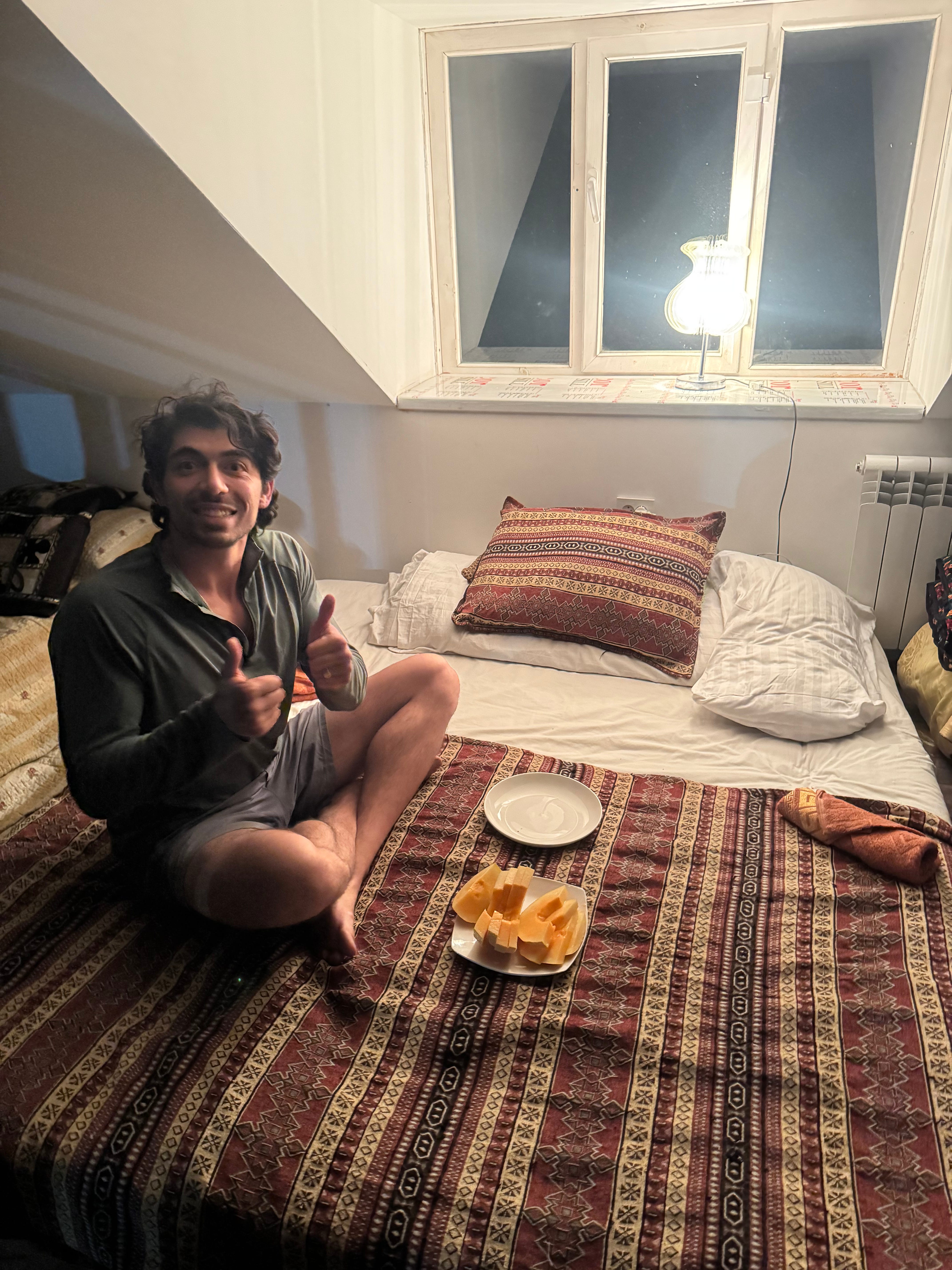
We spent the evening licking our fingers and giggling as we recounted the absurdity of last week.
Segment 6: The end of the road
Now we were feeling pretty tired by this point in the trip, so we just joined a local shared taxi to gun it straight to Dushanbe that next day (a bumpy, 10 hour adventure in an old soviet land cruiser, no less).
We buzzed with excitement, eager for good food, a warm shower, wifi and... creature comforts that we’ve been missing for quite some time now.
Hannah relented on a hike that she missed matcha, dark chocolate that isn’t mass produced milk chocolate in disguise, and food other than cooked cabbage in different forms of carb. In other words, ‘boujie-ness’. Jordan insisted on including the video evidence of this realization.
The end of this segment also brought a lot of reflection.
We’d met so many amazing people in the Pamirs——it really does draw the most grizzly, hard-core, adventurous folks out there. Everyone there is “that girl” or “that guy” that you hear about doing some ridiculous trip. We met travel influencers and bloggers (and not the hot-girl kind), euro-punk bikepackers, lunatic moto-packers (including one Indian who drove across Afghanistan with a bent rim just hoping for the best), and hard-core overlanders (including two Dutch friends who converted a Fiat 500 into an overlanding rig to drive it from Holland to Vietnam fashioning a snorkel out of a vacuum cleaner for the river crossings).
And when people expressed shock that we were hitchhiking, we realized——to our absolute surprise——that we somehow qualified as members of this ‘ridiculous people club’!
We’d spent evenings in these guesthouses exchanging stories about wacky adventures, sticky situations, and near-misses. Everyone was some form of the Dos Equis Man: ”the most interesting [person] in the world.”
But at the same time it felt like this was the end of that chapter. Like we were ready to move on.
Yes, you can always find that next crazy place to visit, or do it in some inconvenient mode of transportation (tuktuk? bike? skateboard? boat?). But you know where there’s just as much adventure? Maybe even more?
HOME.
Building a family. Building a community. Building a purpose.
Most of the crazy-cool people we’ve met out in the world are just like the rest of the crazy-cool people in your own neighborhood. They just chose to express it differently.
So, yeah. It feels like time to do the next thing.
It feels like we’ve started the home-stretch of the Jordan/Hannah world tour.
And we’re really excited to start that next chapter
with all of you.
See you soon!
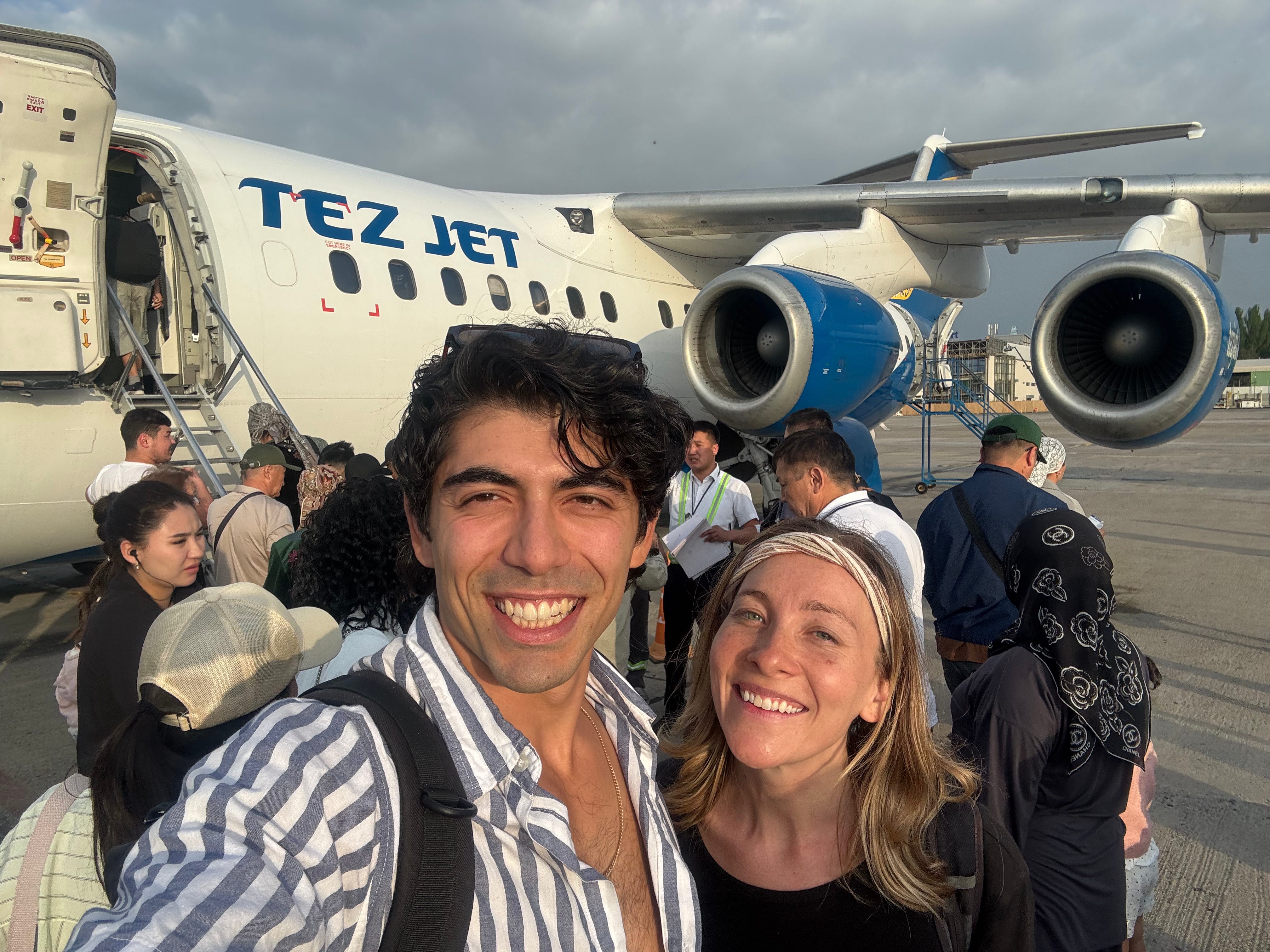
Wow!!!! I’m glad JoJo wasn’t traveling solo. Thanks for staying safe. The pictures are beautiful. 😍