


Pop quiz.
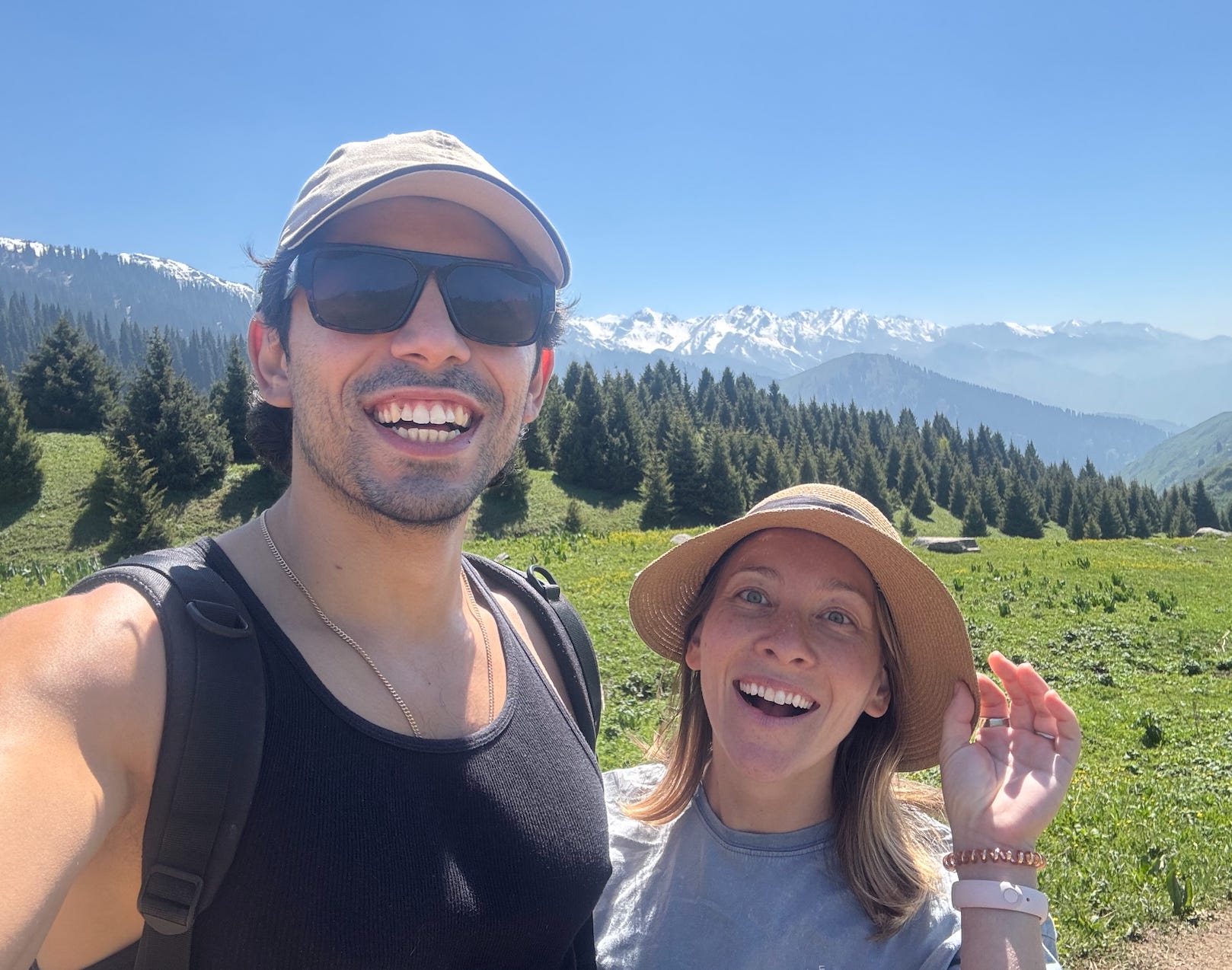
Here’s a photo from a couple weeks ago. Where do you think we were?
Looks like Colorado? Canada?
I’ll let you think about it.
…
…
This month, we’ve been in a part of the world that most people don’t really underSTAN (😉). Telling our college-educated friends has usually resulted in texts such as:
“Ummm, typo?”
“Is that a country?”
or “Where in the world is that?”
We’re talking, of course, about Central Asia. Here’s a map.
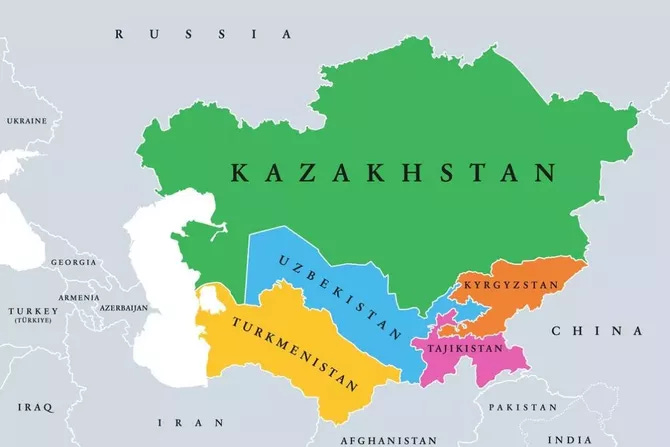
It’s a highly improbable part of the world.
A land filled with mostly muslims who speak Turkic languages written in the Cyrillic (Russian) alphabet.
A land with Mongoloid nomad ancestry, but whose older folks still sport a signature Soviet resting bitch face, despite being mostly very peppy, relentlessly helpful people.
This region has a highly unlikely history, including a conqueror who killed 5% of the world population, a secret multi-cultural empire you’ve never heard of that controlled the entire language and finances of the silk road, and an unrivaled oral storytelling tradition whose primary epic makes the Iliad and the Odyssey look like a children’s book (and is 20x the length of them combined).
In general, it’s a part of the world that seems to do very unlikely things.
Kazakhstan, at the fall of the Soviet Union, wanted to become a voice of nuclear nonproliferation, so they gave their entire soviet nuclear arsenal——the 4th largest in the world——back to Russia. The country is now approaching a futuristic petro-state akin to the likes of the Persian Gulf (albeit with much more lush nature than desert). And no, it’s nothing like Borat.


Uzbekistan, despite having the approximate GDP per capita of the Philippines or Djibouti, has liberalized it’s economy and attracted so much investment that its sparkling airports, high-speed rail, and tree-lined city streets look as much like they belong in European capitals as ancient Silk Road towns.


Kyrgystan and Tajikistan, despite being even poorer (with GDP per capitas more similar to Zimbabwe, Haiti, or the Congo) AND covered ~95% in mountains, manage to maintain an astonishingly safe, peaceful, and alpine existence still rooted in pastoral culture.
Quiz: What are the 4 highest countries on Earth by average elevation? (Answer below photos)


Quiz Answer: #1 - Bhutan, #2 - Nepal, #3 - Tajikistan, #4 - Kyrgyzstan (with over 40% of its land above 3000m!!)
So what’s the secret sauce that makes these places so incredibly livable, despite such destabilizing histories, punishing climates, and underdeveloped economies?
Well, that’s what we wanted to find out.
Sharing
In Uzbekistan, we discovered a strong sharing culture. When people cook, they cook for many. When you sit next to strangers on a train, you all share what you have—even if it’s clumps of chicken to be torn apart by hand. When someone invites you into any room, you never refuse tea.
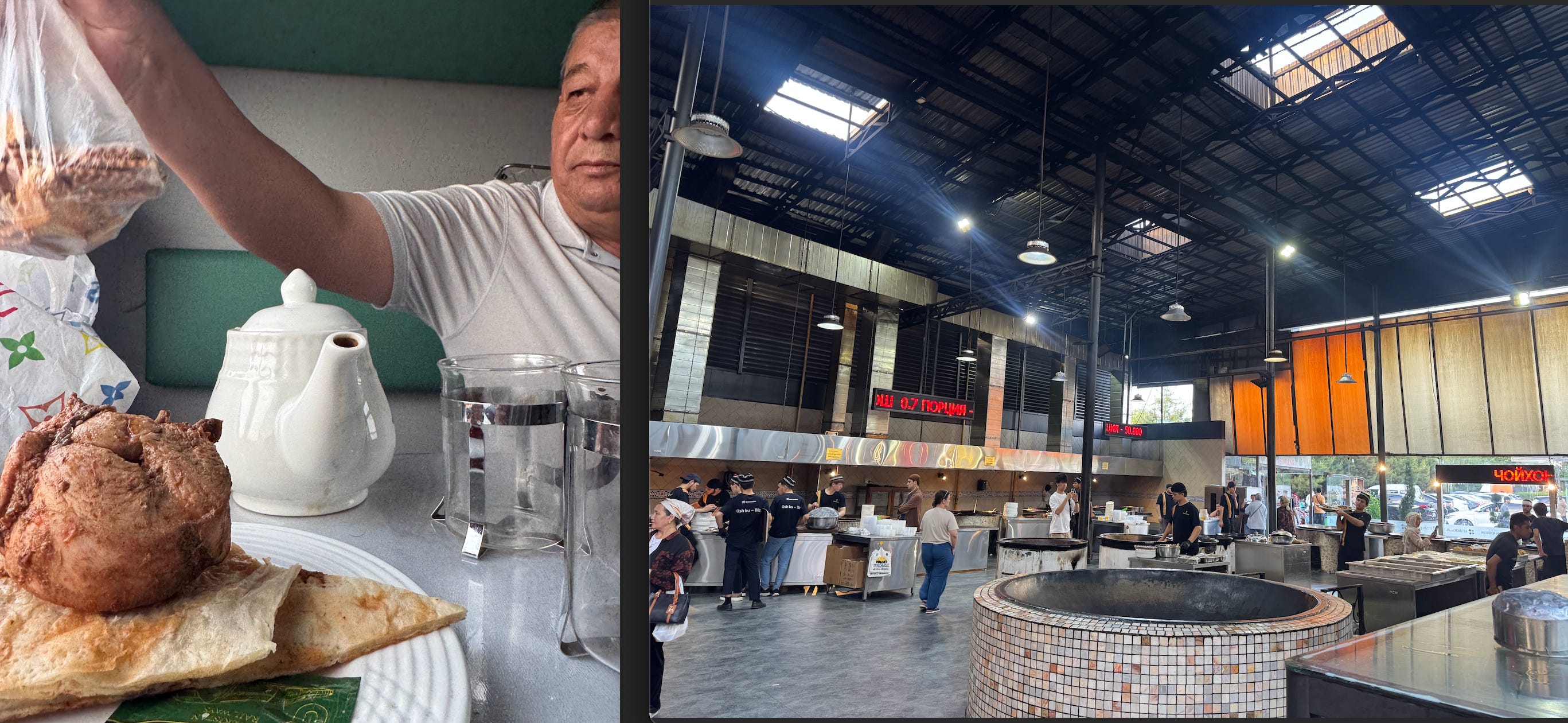
The culture here is shaped by muslim values, desert self-sufficiency, and silk road hospitality. You always think in abundance—everything can be shared. You always look out for fellow community members trying to survive between bouts in the desert and then the mountains. You also never waste food——the Uzbeks never leave a single morsel of bread on the table.
Freedom
In Kazakhstan, we wanted to understand the vastness of the steppe, so we took a 21 hour train from Astana to Almaty to FEEL how massive this land was. Here’s Hannah studying Portuguese in our fancy private cabin (with bathroom!)
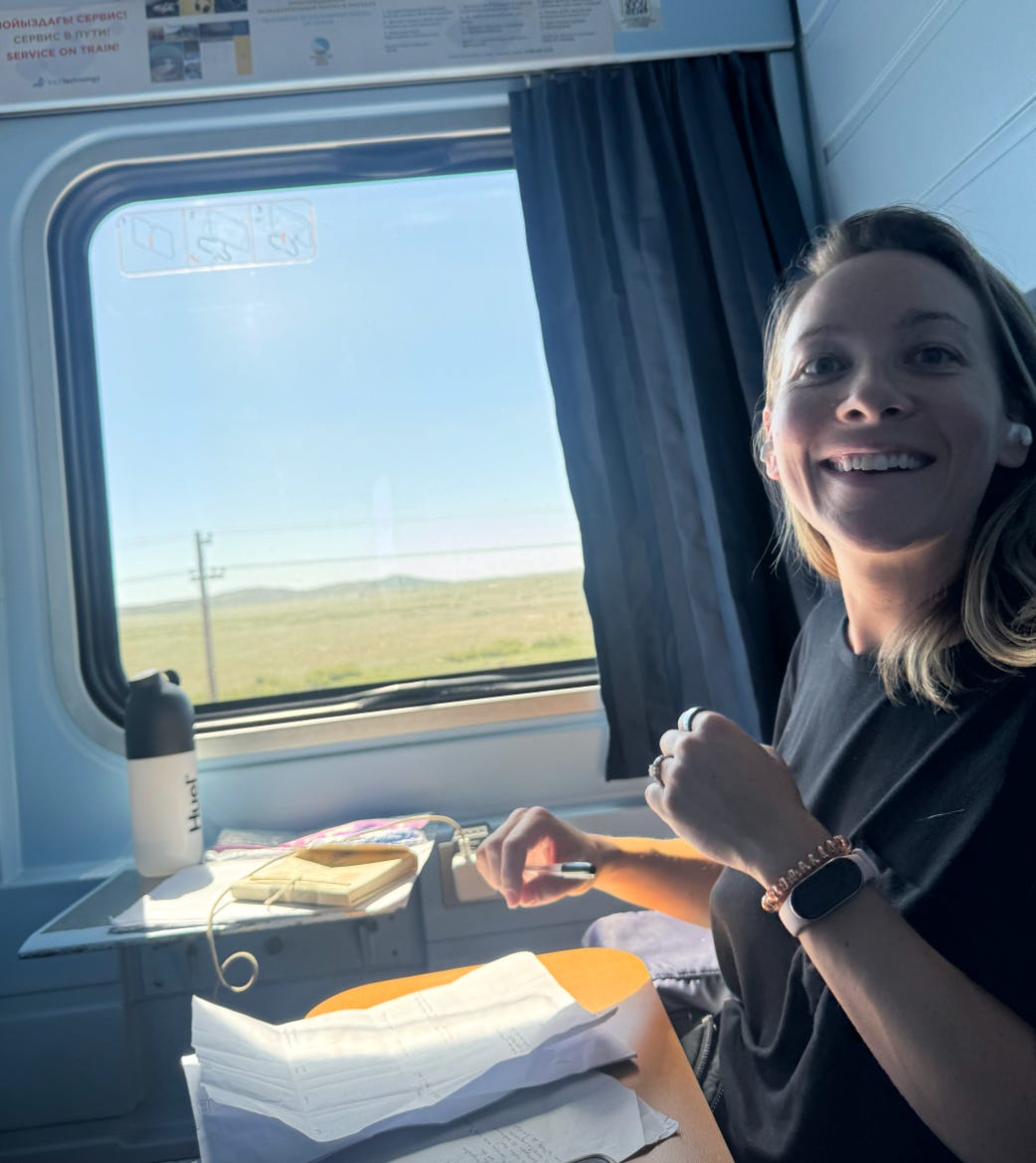
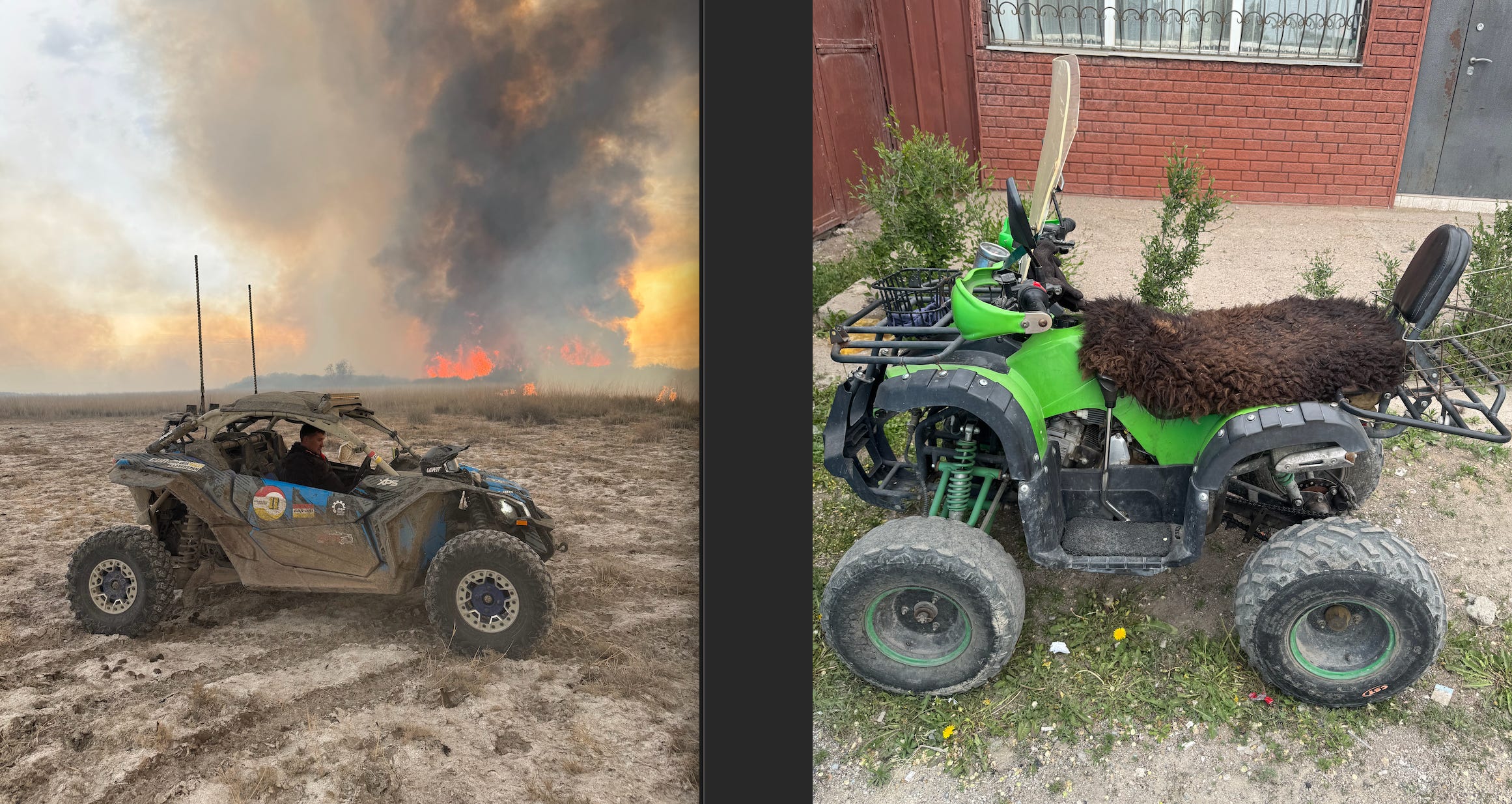
When we reached Almaty, we found beautiful mountains and a culture that loves being outdoors. Kazakhs love freedom more than most cultures I’ve ever met——you can add horsepower, but you’ll never get rid of the fur).
Birds of prey
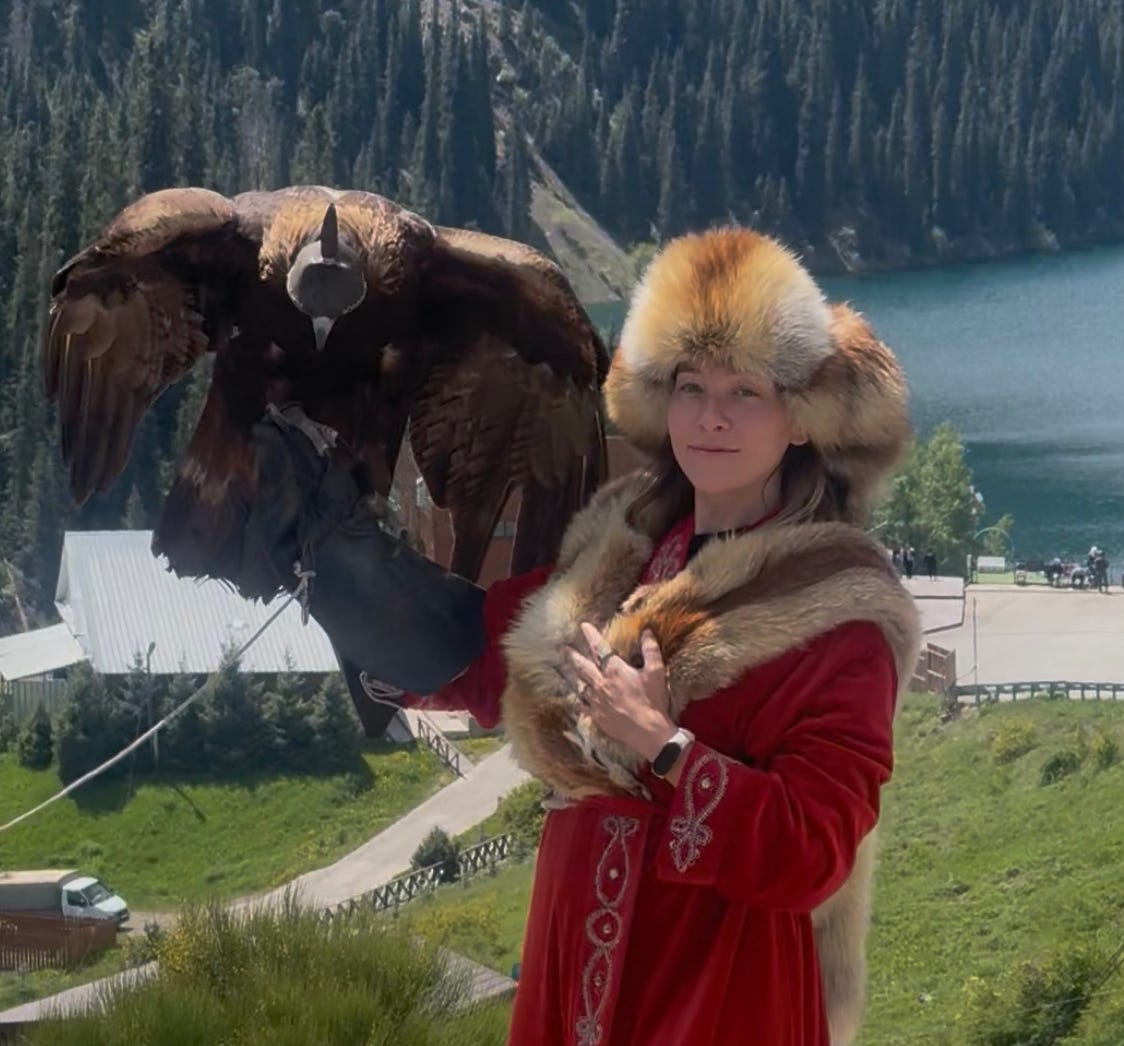
We also got to see their deep respect for animals, particularly hunting birds, which they needed in order to get food to survive the arctic winters and hot summers. We got up close and personal with great eurasian owls, golden eagles, himalayan vultures, and all kinds of scary feathered friends. Hannah also became a Mongol queen, with her new eagle named——fittingly——“Han”.
Hitchhiking
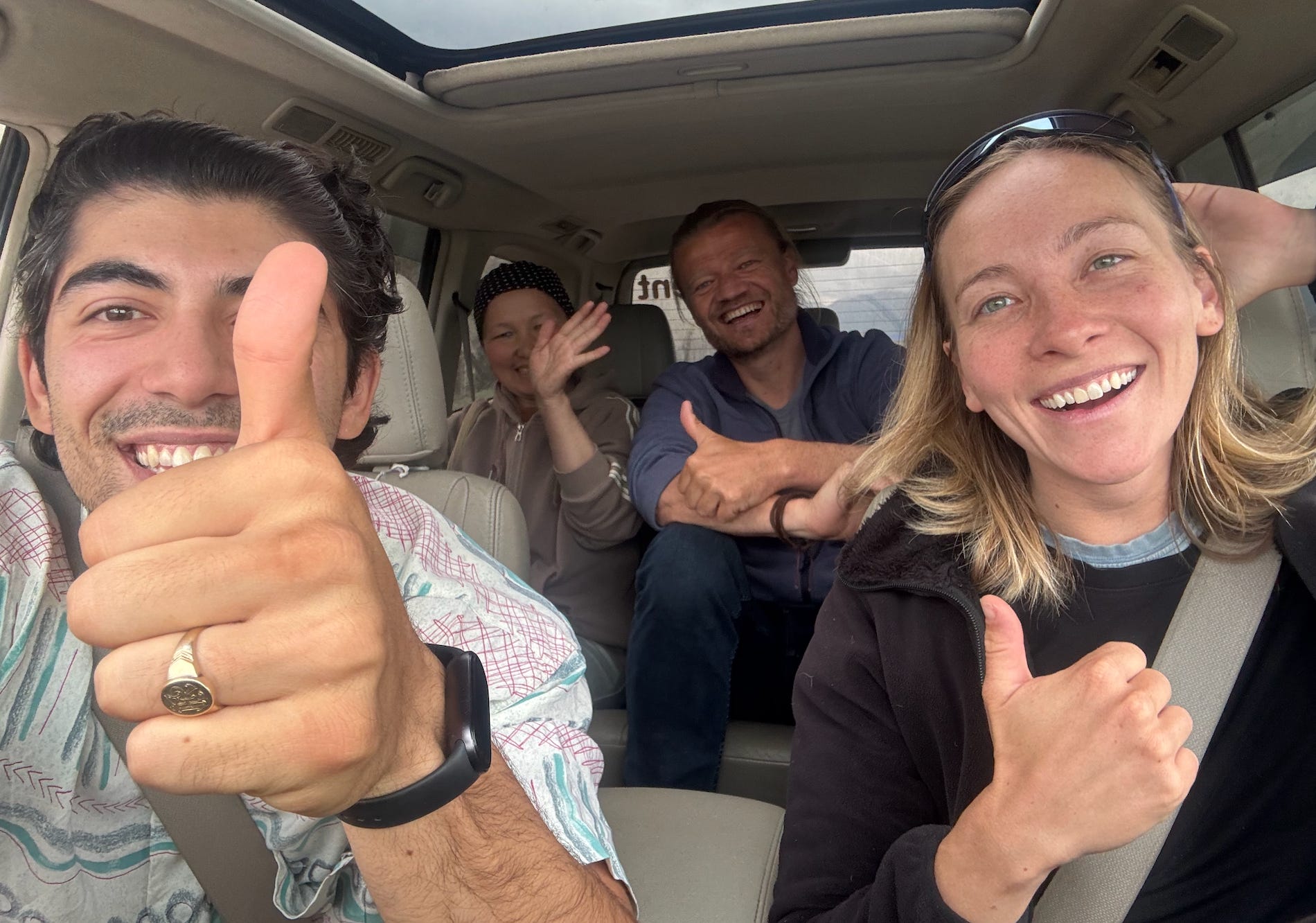
Our traverse from Kazakhstan into Kyrgystan showed us that nomadic kinship is still alive and well… in hitchhiking culture. Everyone from 8 year olds to grannies hitch rides by the roadside, since public transit isn’t great in these remote parts. People see their vehicles as public goods, and often feel bad if they can’t fit you in the car. Its also considered impolite to leave someone exposed in the elements outside, so we had many drivers offer us food or drink as we awaited out next ride.
We hitched rides in luxury jeeps (with complementary beverage and snack service!), tourist campervans, everyday family vans, and even cement trucks. We’d throw them some money for gas, and offer them a pick from our back of exotic candies :)


Living like locals
In Kyrgystan, we switched it up a bit. We decided to rent our own car to go a bit more off-road. We drove around open grassy expanses, fed wild horses, got caught in herds of goats, did some incredible hiking, but most importantly were able to return the favor to all the kind folks who picked us up on the road——we picked up every hitchhiker we could! We’d make stops to offer candy to kids or truckers by the roadside, which sometimes led to little impromptu picnics with nice Kyrgyz strangers.


Horsin’ around
The Kazakhs and Kyrgyz also LOVE their horses. We had to experience this ourselves, so we did a 3-day horse trek through mountains into Song Kol lake——a magnificent adventure that, despite some butt bruises and Jordan getting thrown off the horse, allowed us to meet some amazing backpackers, watch adorable shepherds, sleep in ornate yurt camps under the stars (it even snowed on us a couple days!), and help us understand what it really means to put your life into the hands (hooves?) of another being.


Even when we weren’t on horses, we always looked for opportunities to have fun with the locals——whether it was befriending kids by taking shots of fermented horse milk on the roadside (kummis!), or breaking out into dance parties in restaurants (here’s Spencer laying down some moves at the Kazakh granny birthday party).
Yes, the horse people sure do love horsin’ around.
So what did we learn?
This trip oscillated between periods of immense self-reliance——rugged terrain, iffy weather, remote places, off-roading, and little infrastructure——but also a massive amount of mutual care. The generosities people bestowed upon us created such a strong desire to give back in return.
And maybe that’s the secret sauce. The thing that makes this beautiful nomadic paradox of a region move forward.
The cultures of this region are so self reliant (if you also include horses and birds, I guess!), but are really good at asking for help, and giving it to those in need. And maybe it’s that very balance that allows these countries to have such a high degree of trust and safety, despite the relative poverty.
And Hannah and I certainly felt it too within our own relationship. Throughout our travels, we always feel the need to be independent, but also to maintain the ability to ask for help, to rely on each other when it really matters.
This is probably true for any relationship.
But either way, this trip has left us with a bounty of fond memories to remind us how to give in the years to come.
With love,
Jordan & Hannah
What amazing adventures in the “Stans”. You do a beautiful job with this blog ~ i love all of the pictures. Thank you so much for sharing your adventures. Love you both so much and please stay safe. 😍